
Plans, services, and placement
Best Executive Functioning Supports at School
Find the best executive functioning supports school teams can provide, from IEP goals to accommodations that build independence and protect access daily.
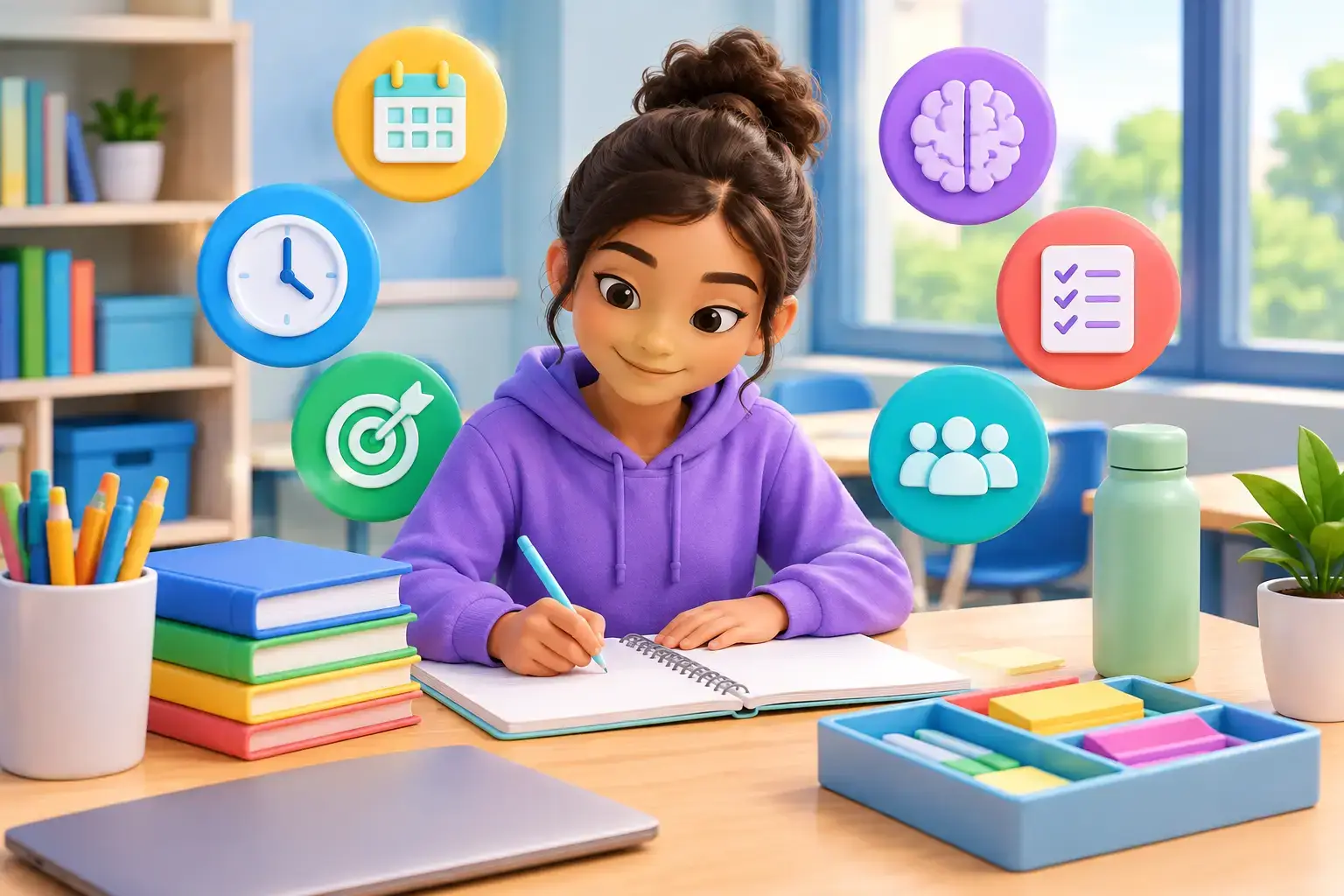
A child who cannot start an assignment, remember multi-step directions, organize materials, or manage time is not simply being careless. These are executive functioning needs, and they can block access to instruction just as surely as a reading or math disability. The best executive functioning supports school teams provide are not vague reminders to “try harder.” They are documented, individualized supports that reduce barriers now while teaching skills over time.
For families, the problem is often not a lack of concern. It is that schools describe the concern in broad language but fail to turn it into services, accommodations, measurable goals, and consistent adult support. Your child deserves more than a planner handed out in September and a note home when work is missing.
What executive functioning looks like at school
Executive functioning is the set of mental skills that helps a student plan, begin, remember, prioritize, shift between tasks, manage emotions, and monitor progress. A child may understand the lesson completely and still be unable to show that knowledge independently.
At school, these needs can look like incomplete classwork, lost assignments, late projects, rushed tests, disorganized backpacks, difficulty transitioning, emotional shutdowns, or repeated redirection. The pattern matters. If a student needs significant adult prompting to get through ordinary demands, that is information the school team must address.
Do not let the conversation stop at behavior labels such as “unmotivated,” “inattentive,” or “doesn’t use the tools provided.” Ask what happens before the missed work, how many prompts are needed, whether the child can use a tool without adult support, and what the student is missing as a result. Those details move the discussion from opinion to educational impact.
The best executive functioning supports at school are matched to the barrier
There is no single best planner, app, or accommodation for every child. The right support depends on whether the main barrier is task initiation, working memory, organization, time management, emotional regulation, or several needs at once. A support that helps a student record assignments will not solve a child’s inability to begin work when overwhelmed.
Start with direct, consistent adult support
For many students, particularly those who are younger or significantly behind, a daily check-in and check-out can be more effective than another organizational tool. A designated staff member can review the day’s assignments, break down priorities, confirm materials, and make sure the student knows the first step. At the end of the day, that same system can confirm what was completed, what must go home, and what needs to be communicated to family.
This is not “hand-holding” when a child cannot yet perform these tasks independently. It is access. The team should define who provides the check-in, when it happens, how long it lasts, and how progress will be tracked. “Teachers will remind student as needed” is too vague to hold anyone accountable.
Break work into manageable steps
Long assignments and multi-part directions can create a wall that some students cannot climb alone. Chunking means giving one section at a time, identifying the immediate next action, and checking completion before moving forward. A written checklist can help, but it should be paired with instruction and monitoring when the student cannot independently follow it.
For a research project, for example, a student may need separate deadlines for choosing a topic, locating sources, creating an outline, drafting, revising, and submitting. Waiting until the final due date is not a support plan. It is a setup for failure.
Build organization into the school day
Color-coded folders, a single homework location, visual schedules, posted routines, and electronic assignment systems can be helpful. But families should ask whether the child is being explicitly taught how to use them and whether an adult is checking that the system is working.
A planner is not an accommodation if the child cannot consistently write down assignments, locate the planner, and act on what is written. In that case, the support may need to include teacher-posted assignments, a daily assignment sheet, digital reminders, or staff assistance with recording work. The tool must match the child’s actual level of independence, not the level adults wish they had.
Protect time and reduce unnecessary overload
Extended time, reduced-distraction testing, flexible deadlines, and advance notice of major assignments may be appropriate when executive functioning needs affect pace and task completion. These supports should not be used as an excuse to lower expectations or indefinitely delay learning. They are intended to give the student a fair opportunity to demonstrate knowledge.
Trade-offs matter. Reduced workload may be appropriate when repetitive work does not measure the skill being taught, but it can become a problem if a school routinely removes essential instruction instead of providing meaningful support. Ask what skill is being measured, what work can be reduced without changing the learning target, and how the student will still receive instruction.
Teach the skill, not just manage the crisis
Accommodations help a student access school. Specialized instruction helps a student gain skills. If executive functioning deficits are affecting educational progress, an IEP may need measurable goals and direct instruction in planning, organizing, self-monitoring, or initiating tasks.
A strong goal does not say a child will “improve organization.” It identifies a skill, the conditions, and a way to measure progress. For example, the team might track whether the student independently uses a task checklist, begins assigned work within a defined time, or submits materials with a specific level of accuracy across several weeks.
The school must also identify who will teach the skill. A goal without dedicated instruction, service time, and progress monitoring is only a promise on paper.
What parents should request before the meeting
You do not need to arrive with a perfect solution. You do need to arrive with facts. Gather work samples, missing-work reports, teacher messages, discipline records if relevant, grades, and notes about how long homework takes or how much adult assistance your child needs.
Bring examples that show the difference between what your child knows and what they can produce independently. If your child can explain a science concept aloud but receives a failing grade because assignments are never turned in, say that plainly. If they spend three hours on work peers complete in 30 minutes, document it.
Ask the team to answer these questions in writing: What executive functioning needs are interfering with access to instruction? What data shows the impact? What supports are currently being used? Who is responsible for implementing them? How will the school measure whether they work?
If your child has an IEP, request that needs be reflected in present levels of performance and that accommodations, services, and goals are specific. If your child has a 504 Plan, make sure accommodations are clear enough to be implemented consistently across classes. A plan that varies according to each teacher’s interpretation is not a dependable plan.
When the school says your child just needs to be more responsible
Children should be supported in developing responsibility. But responsibility grows through instruction, repetition, appropriate scaffolding, and success. It does not grow because adults withhold the support a disability-related need requires.
You can respond calmly and directly: “We agree that independence is the goal. What instruction and supports will be provided so my child can build that independence?” Then ask how the team will fade assistance based on data, not assumptions. A thoughtful plan can increase independence over time. Removing help before the skill exists only creates more failure.
If the school refuses to evaluate, minimizes documented impact, or continues to offer informal help that disappears from one classroom to the next, put your concerns in writing. Request an evaluation or an IEP or 504 meeting, depending on your child’s situation. You have the right to participate meaningfully in decisions about your child’s education. Do not accept delays, excuses, or a plan built around hope instead of accountability.
Your child does not need to earn support by falling further behind. The right school-based executive functioning supports can make the day more manageable now and help your child build the skills to rely on themselves later. Start with the barrier, insist on a clear plan, and keep asking for data until the support on paper becomes support your child can actually feel.
Make this specific to your child
Use YourChildCoach to turn this guidance into a plan for your child's situation.
You don't have to figure out the next step alone. Coach helps you understand what's happening and what to do next, any time it comes up. Plans start at $9 a month. Cancel anytime.
Originally published on YourChild.org.
Federal IDEA requirements provide a baseline. State law, regulations, guidance, and timelines may add or modify requirements. This page provides educational advocacy information, not legal advice.