
Behavior and school access
504 Plan for Anxiety at School
Learn how a 504 plan for anxiety can protect your child at school, what accommodations help, and how to push back when schools delay support.
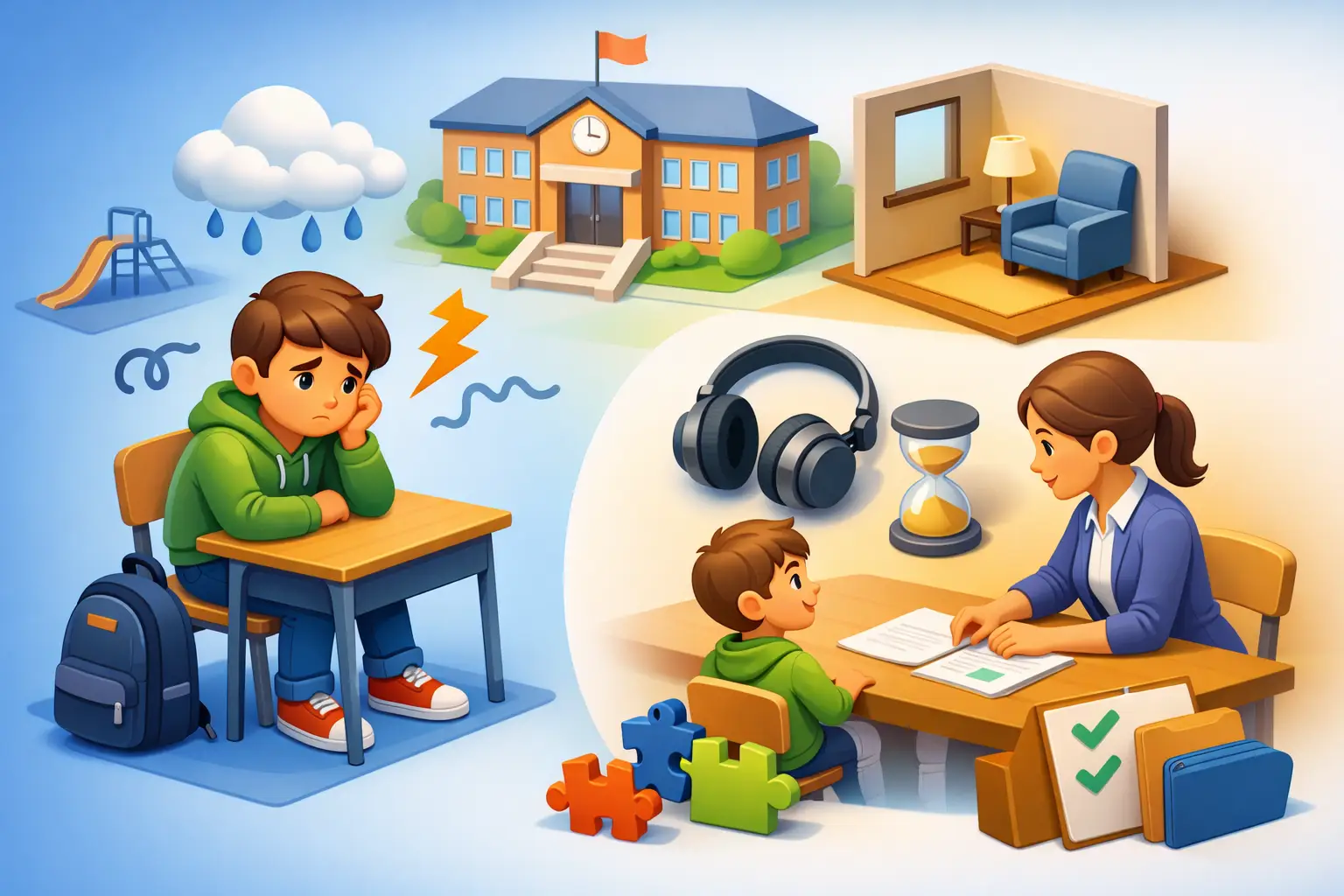
When a child is missing class, melting down before school, or holding it together all day only to fall apart at home, anxiety is not a minor issue. A 504 plan for anxiety can be the difference between a child being labeled difficult and a child getting the support they are legally entitled to at school.
Parents are often told to wait, collect more data, or see whether things improve with time. That delay can cost a child access, confidence, and academic progress. If anxiety is limiting your child’s ability to participate in school the way their peers do, it is time to look seriously at accommodations.
What a 504 plan for anxiety actually does
A 504 plan is a school-based accommodation plan under Section 504 of the Rehabilitation Act. Its purpose is not to change your child’s curriculum or provide specialized instruction in the way an IEP can. Its job is to remove barriers so your child has equal access to education.
For a child with anxiety, those barriers may not always be obvious on a report card. Some students still earn strong grades while struggling to enter the building, speak in class, take tests in a crowded room, or manage transitions without panic. Schools sometimes miss anxiety because the child looks compliant, quiet, or high-achieving. That does not mean the disability is not affecting school access.
A good 504 plan addresses the functional impact of anxiety. It should spell out what the school will do, when it will do it, and who is responsible. Vague language helps schools, not children.
When anxiety may qualify under Section 504
A child may qualify for a 504 plan if they have a physical or mental impairment that substantially limits one or more major life activities. Anxiety disorders can meet that standard. Major life activities include concentrating, thinking, learning, communicating, sleeping, and regulating emotions, all of which can be affected by anxiety.
The key question is not whether your child has a formal diagnosis, although that can help. The real issue is whether anxiety is substantially limiting your child’s access to school. That might show up as chronic absenteeism, school refusal, frequent nurse visits, inability to complete tests, panic during presentations, shutdowns during transitions, or intense distress that interferes with participation.
It depends on the child. One student may need support mostly around testing and public speaking. Another may need daily entry support, a safe person, modified attendance responses, and a quiet place to de-escalate. The law does not require your child to be failing before the school acts.
Signs the school impact is serious enough to address now
If your child is spending enormous energy just getting through the school day, that matters. If homework takes hours because of panic or perfectionism, that matters too. If your child is being disciplined for behavior that is tied to anxiety, the issue is already bigger than stress.
Watch for patterns such as stomachaches before school, repeated tardiness, crying at drop-off, avoidance of group work, refusal to eat at school, frequent requests to call home, or a sharp difference between home behavior and school reports. Many anxious children mask at school and unravel later. Schools do not always see the full picture unless parents document it clearly.
How to ask the school for a 504 evaluation
Keep it direct. Put your request in writing and state that you are requesting an evaluation for Section 504 eligibility due to anxiety and its impact on your child’s school functioning. Briefly describe what you are seeing. Include concrete examples, not just labels.
You do not need to write a legal memo. A short, clear letter or email is enough to start the process. Mention attendance issues, panic symptoms, difficulty with tests, nurse visits, shutdowns, or any other ways anxiety is limiting access. If you have records from a therapist, pediatrician, or psychiatrist, you can include them, but do not wait forever to gather perfect paperwork before asking.
Once you make the request, pay attention to how the school responds. Some schools move forward responsibly. Others stall by suggesting informal supports first or saying the child is doing fine academically. Informal help is not a substitute for a legal plan when disability-related needs are affecting access.
What accommodations may help in a 504 plan for anxiety
The right accommodations depend on the child’s triggers, symptoms, and school setting. What helps one student may be useless for another. That said, some supports come up often because they address common school barriers tied to anxiety.
A student may need preferential seating, extended time on tests, testing in a quiet room, breaks during class, advance notice of schedule changes, shortened presentations, or alternative ways to demonstrate knowledge. Some children need access to a counselor or trusted staff member, a calm-down space, check-ins at the start of the day, or permission to leave class briefly when panic symptoms rise.
Attendance-related accommodations can also matter. If anxiety causes late arrivals, difficulty entering the building, or medically supported absences, the plan may need language addressing how missed work will be handled and how re-entry support will happen. Without that, families often get blamed for disability-related attendance problems while the child falls further behind.
What you want to avoid is generic wording like “as needed” or “when appropriate.” Appropriate according to whom? If the plan says breaks are allowed, it should state how the student requests one, where they go, how long it lasts, and who monitors the support. Specificity creates accountability.
What schools often get wrong
One common problem is minimizing anxiety because the child has decent grades. Equal access is not measured by grades alone. A child can be performing well on paper while paying for it with panic, exhaustion, school avoidance, and emotional collapse.
Another problem is offering only informal reassurance. A kind teacher is not a compliance plan. Staff changes, memories fade, and verbal promises are hard to enforce. If your child needs support consistently, it needs to be documented.
Schools also sometimes confuse discipline issues with disability symptoms. If a child shuts down, refuses to present, leaves class, or has a panic response, the school must look at function, not just compliance. That does not mean every behavior is excused. It does mean the school should respond intelligently instead of punitively.
How to prepare for the 504 meeting
Go in with evidence and a clear agenda. Bring documentation of patterns you have seen, communication from teachers, attendance records, medical or therapy notes if you have them, and a short list of accommodations you believe your child needs. You do not need to know every legal phrase. You do need to be organized.
Focus on how anxiety limits school access. That phrase matters. Explain what your child cannot reliably do, what triggers the problem, and what support changes the outcome. If your child can complete work only after hours of distress, say so. If mornings are a battle and transitions cause panic, say that too.
Do not let the conversation drift into whether your child is just worried, shy, or having a phase. Schools may use softer language that minimizes the impact. Bring it back to function, access, and the need for documented accommodations.
When a 504 plan may not be enough
Some children with anxiety need more than accommodations. If anxiety is significantly affecting learning, behavior, attendance, or emotional regulation, an IEP may be the better fit. This is especially true if your child needs specialized instruction, counseling as a related service, behavior support, or a more intensive plan for school participation.
The line between a 504 plan and an IEP is not always obvious, and schools do not always volunteer the more protective option. If your child’s needs go beyond access and into instruction, skill-building, or significant support services, ask whether a special education evaluation is warranted.
If the school resists or delays
Do not assume the first no is the final answer. Ask for the reason in writing. Ask what data the school used. Ask who participated in the decision and whether your records were considered. Keep your communication calm, factual, and documented.
If the school agrees your child has anxiety but claims accommodations are unnecessary, press for specifics. How is the child accessing education equally? How are panic symptoms, missed instruction, or avoidance being addressed? General statements are not enough.
This is where families often need advocacy support. You do not have to walk into these meetings alone or accept vague assurances while your child struggles. At YourChild.org, the goal is simple: help parents push for support without excuses, delays, or limits that block a child’s education.
Your child should not have to prove they are falling apart before the school takes anxiety seriously. If access is being limited, action is justified. Start with clear documentation, insist on specificity, and keep the focus where it belongs - on what your child needs to function safely and fully at school.
Make this specific to your child
Use YourChildCoach to turn this guidance into a plan for your child's situation.
Turn the issue into practical questions, written language, and a clear next move. Your first answer is free.
Originally published on YourChild.org.
Federal IDEA requirements provide a baseline. State law, regulations, guidance, and timelines may add or modify requirements. This page provides educational advocacy information, not legal advice.